
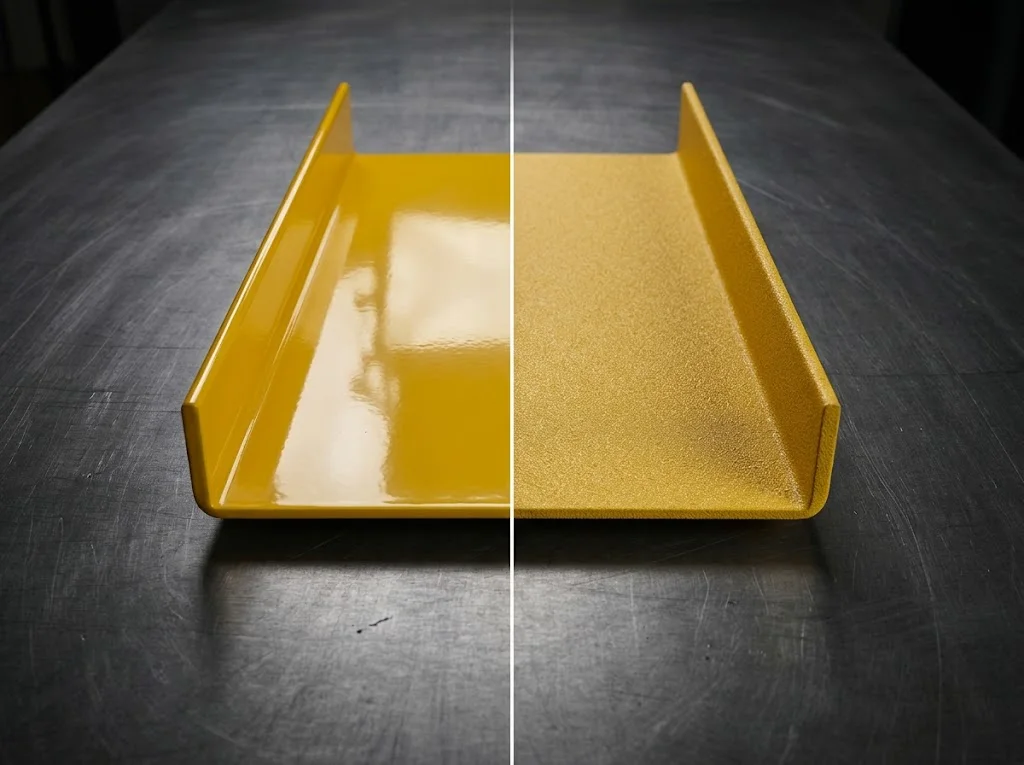
When choosing powder coating for metal products, the RAL colour is only half the story. An equally important parameter is the texture of the coating. It determines not only the appearance and feel, but also the product's practical properties: wear resistance, surface preparation requirements and ease of care.
In this article we look at the main differences between smooth and textured powder coatings, their types and how to choose them for specific tasks.
Smooth powder coatings: aesthetics and a classic look
A smooth surface is the classic choice for many industries. By gloss level, smooth coatings are divided into:
- Gloss (76–85% gloss);
- Semi-gloss / Semi-matt (21–75% gloss);
- Matt (0–20% gloss).
Advantages of smooth coatings:
- Perfect cleanliness and easy care: Dust and dirt do not stick to a smooth surface, so it is easy to wash and disinfect.
- Maximum colour reflection: Gloss emphasises the depth of the shade, creating a mirror-like or premium effect.
- Versatility: Suitable for medical equipment, household appliances, façade profiles and car wheels.
Important to consider: Smooth coatings (especially gloss) require perfectly prepared metal. Any scratches, grinding marks or welds will be clearly visible after curing.
Textured powder coatings: practicality and depth
Textured paints contain special additives that create a relief pattern while curing in the oven.
Main types of texture:
1. Fine texture (sand finish):
- A fine-grained texture that feels velvety to the touch, similar to fine sandpaper or semi-matt sand.
- Advantages: Looks understated and expensive, does not show fingerprints.
- Applications: Designer furniture, loft structures, lighting fixtures, retail equipment.
2. Coarse texture (Wrinkle Finish):
- A pronounced deep texture with random folds.
- Advantages: Excellent defect masking, high strength and a unique look.
- Applications: Electrical cabinets, metal entrance doors, machine housings, safes, engine valve covers, car tuning, sports equipment, firearms.
How to choose the right texture: 4 main criteria
To decide on the texture for your product, answer the following questions:
1. What is the quality of the metal surface preparation?
- If the part has welding marks, casting pores or irregularities and the budget for grinding is limited, choose a textured coating (fine texture or wrinkle finish).
- If the metal is perfectly smooth or rolled (for example an aluminium profile or sheet steel), you can safely choose a smooth coating.
2. In what conditions will the product be used?
- For rooms with strict hygiene requirements (laboratories, food production, medical facilities), the better choice is a smooth coating, as it is easier to disinfect.
- For intensive daily use (furniture frames, door handles, electrical panels), the ideal choice is moiré or fine texture, as scratches and fingerprints are less visible on them.
3. What are the aesthetic and style requirements?
- For modern high-tech or classic design, people usually choose smooth matt or semi-matt.
- For loft, industrial design or premium accessories, a great choice is moiré or a wrinkle finish.
4. Care and cleaning specifics
- Smooth surfaces are easy to wipe with microfibre.
- Deep textures (especially wrinkle finishes) need cleaning with a soft brush or compressed air if dust builds up.
Conclusions
The choice between smooth and textured powder coating depends on the balance between aesthetics, the quality of the base metal and the operating conditions. Smooth paints give a classic, clean look, while textured coatings add practicality, hide metal flaws and give products depth.